
Interconnecting Exile
Practices of Recollection, Intertextuality and Memory
in German language writing (19th–21st centuries)
About this Project
UK-German Funding Initiative
in the Humanities 2026–2029
The core of this project is a transformed understanding of exile writing: not only as the product of specific historical and biographical contexts, but also as being heavily marked by interconnective literary practices. These practices transcend the immediate circumstances in which a text is written, to link different articulations of exile across time and space. References by one exile author to another overcome the ruptures and dislocations which define exile, whilst at the same time keeping them entirely visible. These interconnections are generated by various literary practices and narratives of collecting, through intertextuality and in multidirectional modes of memory. In order to establish a new systematic approach to exile literature across centuries, the project brings together text corpora from the 19th to the 21st centuries and shows how interconnections are created via common motifs, narratives and quotations. The project also critically explores digital methods for collating and visualizing the networked qualities of literary texts.
This project is divided into three Subprojects:
Subproject 1 examines the first half of the nineteenth century as a formative era of literary exile. Writers who are traditionally associated with the Vormärz movement will, for the first time, be systematically analyzed as authors of exile literature, thereby addressing a longstanding gap in nineteenth‑
century literary history.
Subproject 2 is concerned with the writings of exiles from Nazism. It will show the range and flexibility of literary inter-
reference in this period, concentrating on literary writing on the one hand and on feuilleton journalism on the other. In particular, it asks how exile authors in this period were connected by their relationship with diverse national and international canons.
Subproject 3 examines an emergent form of German-language exile literature, written by authors who have fled to German-speaking countries from dictatorships and crisis regions in other parts of the world. This subproject studies contemporary references to the tradition of German (exile) literature as well as to other literary traditions.
Publications >
Team >
News >
-
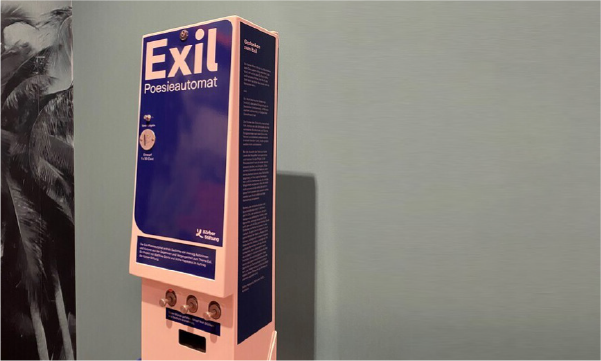
Launch Event at the Exile Library of the University of Hamburg
We are launching the project on 6 May at 18:00 in the Exile Library of the University of Hamburg. Volya Hapeyeva will be reading from her work and presenting the “Exilautomat”. More details here.


„[…] bis die Exilerfahrungen der anderen zum Wasser für mein dürstendes Ich wurden.“
Rosa Yassin Hassan: Mein Name ist Flüchtling… (Brief an Hannah Arendt),
in: Die Zeit 3.12.2018

Project Leads